

Beginner woodworking safety starts with simple habits that protect you, your tools, and your project. You do not need a professional workshop to work safely, but you do need a clean space, the right protective equipment, and a clear plan before making the first cut.

Beginner Woodworking Safety Starts Before the Tools Turn On
Most workshop accidents are easier to prevent than to correct. Before using any hand tool or power tool, take a few minutes to inspect your workspace, review the project steps, and remove anything that could create a distraction or obstruction.
If this is your first project, begin with a clear plan. Our guide on how to plan your first woodworking project explains how to organize your materials, measurements, and work sequence before construction begins.
Clear and Organize the Work Area
A safe workspace should give you enough room to move without stepping over cords, boards, tools, or scrap pieces. Keep the floor dry and remove loose sawdust regularly, especially near entrances and around power tools.
- Place frequently used tools within easy reach.
- Keep extension cords away from walking paths.
- Store unused lumber where it cannot fall or shift.
- Remove offcuts and packaging before they accumulate.
- Make sure the workbench is stable and level.
Use Good Lighting
Good lighting helps you see layout marks, blade positions, board defects, and moving parts. Shadows can make it difficult to judge distances accurately, so use bright overhead lighting and a movable task light when necessary.
Wear the Right Personal Protective Equipment
Personal protective equipment should be used every time the task calls for it, even when the cut or sanding job will take only a few seconds. Protective equipment cannot replace careful tool use, but it provides an important additional layer of safety.
Protect Your Eyes
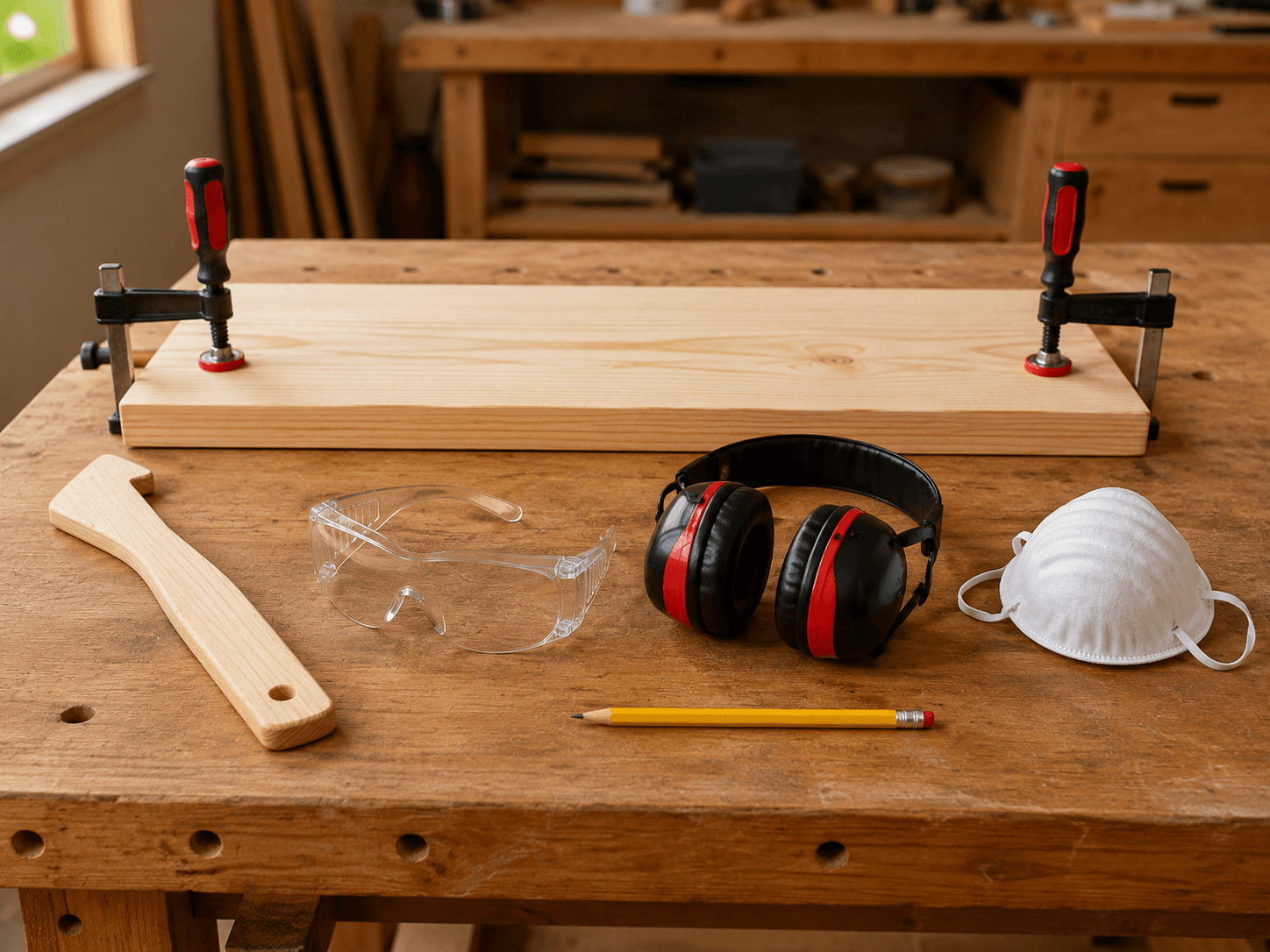
Wear safety glasses whenever you are cutting, drilling, sanding, hammering, or working around flying debris. Regular prescription glasses are not a substitute unless they are specifically rated for impact protection.
Protect Your Hearing
Power saws, routers, sanders, and shop vacuums can create damaging noise levels. Use earmuffs or properly fitted earplugs during extended tool operation.
Control Wood Dust
Fine wood dust can irritate your lungs and remain suspended in the air long after sanding or cutting ends. Use a dust mask or respirator suited to the task, connect dust collection when available, and improve ventilation without directing dust toward other people.
Explore a large collection of woodworking plans designed to help you organize materials, measurements, and project steps before you begin. View the woodworking plans here.
Inspect Every Tool Before Use
Never assume a tool is ready simply because it worked the last time you used it. A loose adjustment, damaged cord, dull blade, or missing guard can turn a routine task into a serious hazard.
Beginners should also avoid purchasing more tools than they can learn to use safely. The guide to essential woodworking tools for beginners explains which basic tools are most useful when starting out.
Check Hand Tools
- Make sure hammer heads are secure.
- Inspect chisels for damaged handles or chipped edges.
- Confirm that saw handles are tight.
- Replace cracked or splintered handles.
- Keep cutting edges sharp and properly maintained.
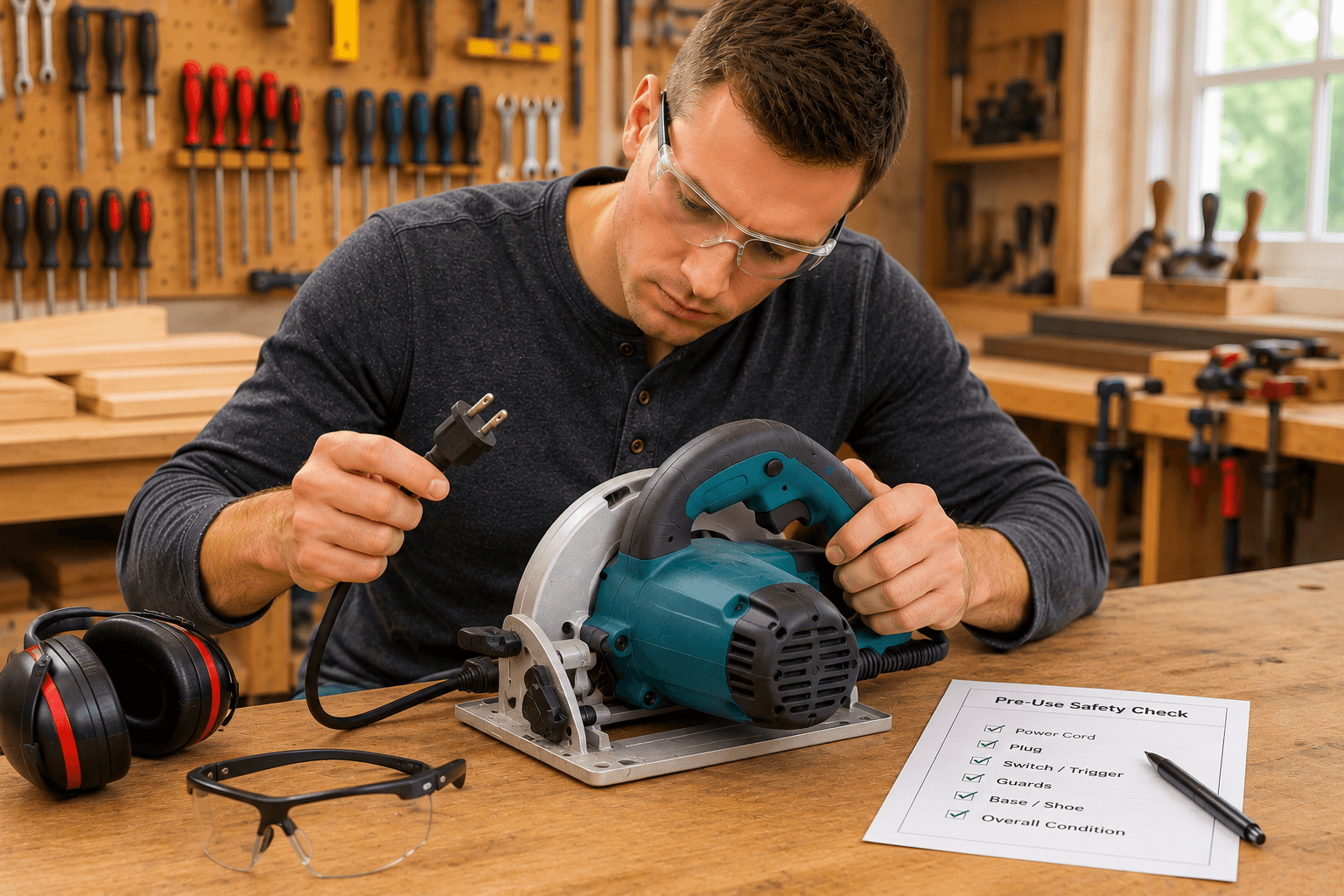
Check Power Tools
- Unplug the tool before changing blades, bits, or accessories.
- Inspect power cords and plugs for damage.
- Make sure guards and safety devices are installed.
- Confirm that adjustment knobs are tightened.
- Remove adjustment keys before starting the tool.
Secure the Workpiece Before Cutting or Drilling
A board that shifts during a cut can damage the project and place your hands in danger. Use clamps, a vise, or another suitable holding method whenever the material cannot be controlled safely by hand.
Keep Hands Away From Cutting Paths
Before starting a cut, identify where the blade or bit will travel and where your hands will remain throughout the entire motion. Never place your hand directly behind a cutting tool or in the path of a blade.
Use Push Sticks and Guides
Push sticks, push blocks, fences, and guides help maintain control while increasing the distance between your hands and the cutting edge. They are especially important when working with narrow stock or making repeated cuts.
Use Each Tool Only for Its Intended Purpose
Improvised methods often create unnecessary risk. Do not use a screwdriver as a chisel, a wrench as a hammer, or a damaged blade because it appears good enough for one more cut.
Read the manufacturer’s instructions before using an unfamiliar tool. Learn how the controls, guards, adjustments, and emergency stops work before the tool is connected to power.
Allow the Tool to Reach Full Speed
When using a power saw, router, or similar tool, let the motor reach full operating speed before contacting the wood. Feed the material steadily without forcing it through the blade or bit.
Wait for Moving Parts to Stop
After switching off a tool, keep your hands away until the blade, bit, or sanding surface has completely stopped. Never try to slow a moving blade with your hand or a scrap piece of wood.
Choose Safe, Stable Lumber
Twisted, bowed, cracked, or heavily knotted boards can move unpredictably during cutting. Inspect lumber carefully and avoid forcing unstable material through a saw.
Our guide on how to choose the right wood for beginner woodworking projects explains how to compare common lumber types and identify boards that are easier for beginners to handle.
Watch for Hidden Metal
Reclaimed lumber may contain nails, screws, staples, or other metal objects. Inspect it carefully before cutting, planing, or sanding. A hidden fastener can damage a tool and create dangerous flying debris.
Avoid Distractions and Fatigue
Woodworking requires attention. Stop working when you are tired, rushed, frustrated, or unable to concentrate. Taking a break is safer than attempting to finish one last cut when your focus is fading.
- Do not use tools while impaired by alcohol or medication that affects alertness.
- Keep phones and unrelated conversations away from active tool use.
- Do not allow children or pets into the immediate work area.
- Finish one operation before preparing for the next.
- Never rush to complete a project.
Keep a Basic Workshop Emergency Plan
Even a small home workshop should have basic emergency supplies and a clear response plan. Keep a properly stocked first-aid kit nearby, know where the electrical disconnects are located, and make sure you can leave the workspace quickly if necessary.
Prepare for Fire Risks
Keep sawdust away from sparks, heaters, open flames, and overloaded electrical outlets. Store oily finishing rags according to the product instructions because some oils can generate heat as they cure.
Know When to Stop
Stop using a tool immediately if it begins vibrating unusually, producing smoke, making a new sound, or losing power. Disconnect it and identify the problem before continuing.
Detailed plans can make it easier to understand each project stage, prepare the correct materials, and avoid rushed decisions. Browse the woodworking plan collection.
Beginner Woodworking Safety Becomes a Habit
Safe woodworking is not based on one rule or one piece of equipment. It comes from repeating small, careful actions every time you enter the workshop.
Start by keeping the workspace organized, wearing proper protection, inspecting tools, securing the material, and staying focused. As these habits become automatic, you will be able to concentrate more fully on accuracy, craftsmanship, and enjoying the project.

